Launch offer — valid today only

📄 Digital book in PDF · read it on your phone or print it

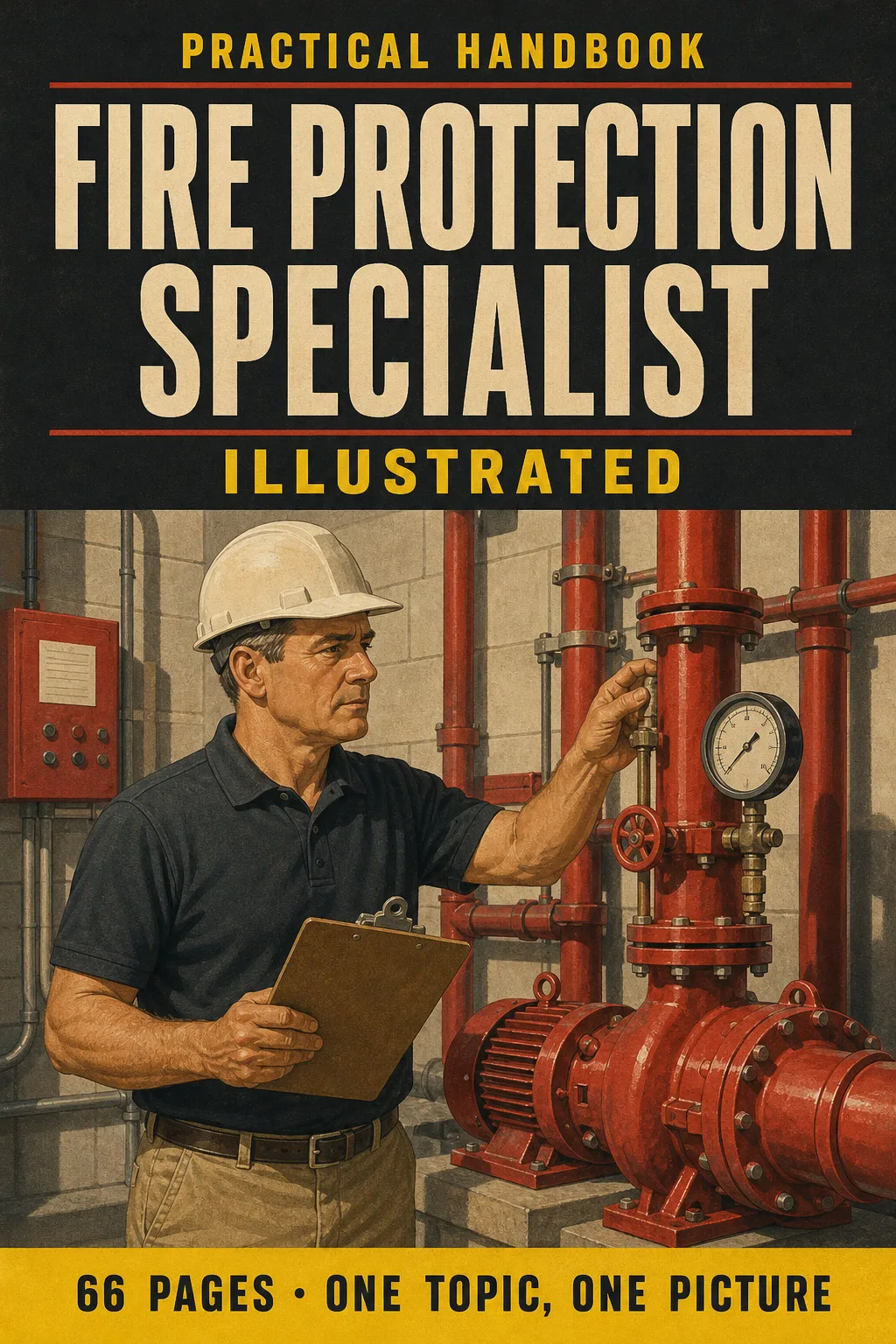
CFPS Exam Prep in Drawings: Know Which NFPA Standard to Open One Topic on Every Page

Fire science, construction types, means of egress, water supply, fire pumps, sprinklers, fire alarm, special hazards and ITM. Every topic gets its own page: the drawing first, then what you need to remember. 66 illustrated pages.

START STUDYING THIS WAY

🔒 Secure checkout · PDF by email · 30-day guarantee

Every topic, its own pageEach system drawn, with the explanation right beside it
66 illustrated pages9 parts, from how the CFPS works to the exam-day checklist
Up-to-date sourcesChecked against the Fire Protection Handbook edition in the current CFPS Candidate Handbook and NFPA 13, 14, 20, 25, 72 and 101
PDF by emailFormat

Look Inside the Book

Every page has one big drawing and a box with the numbers and the standard to look up:

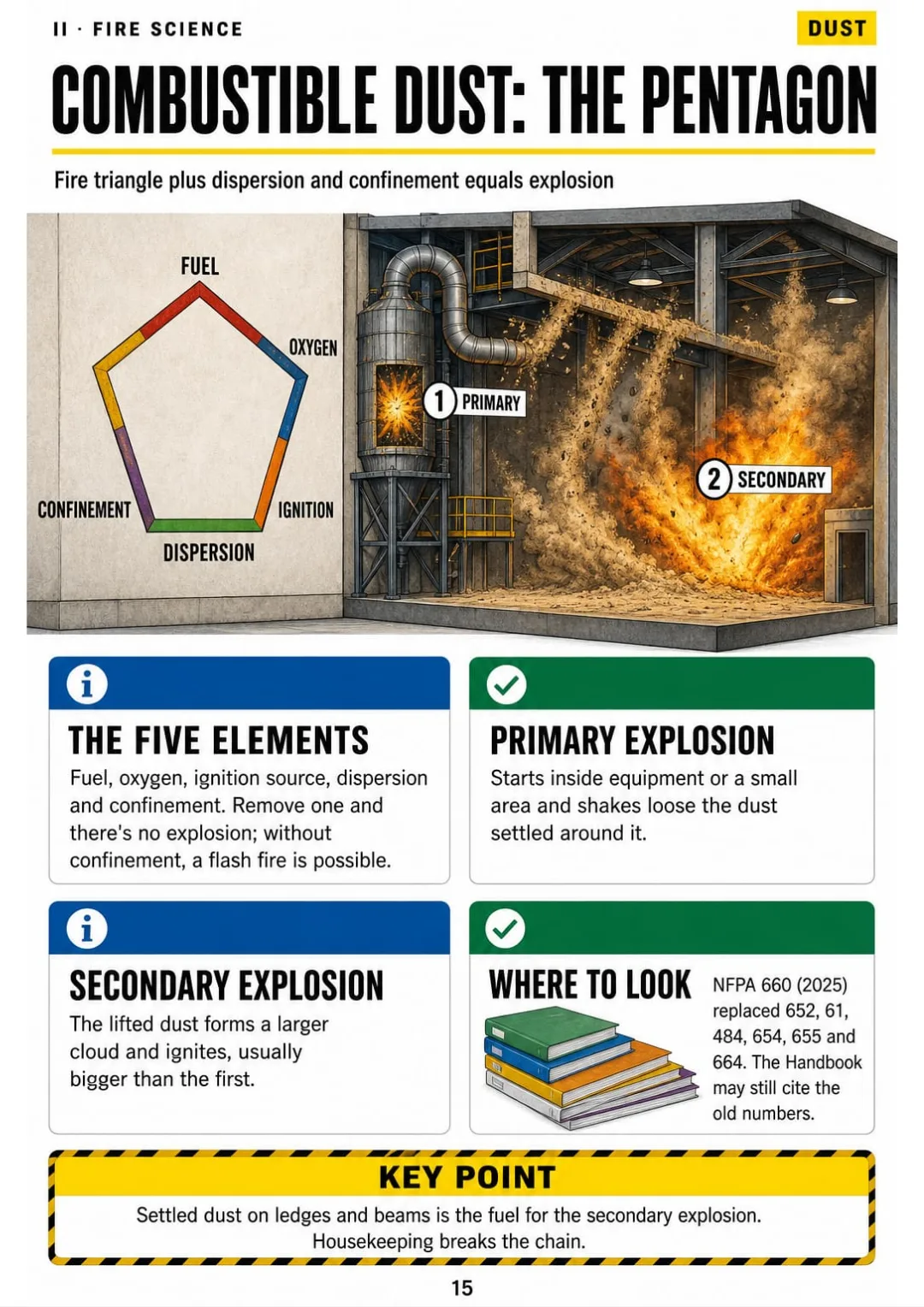
Dust pentagon: fuel, oxygen, ignition, dispersion, confinement; primary vs. secondary explosion.
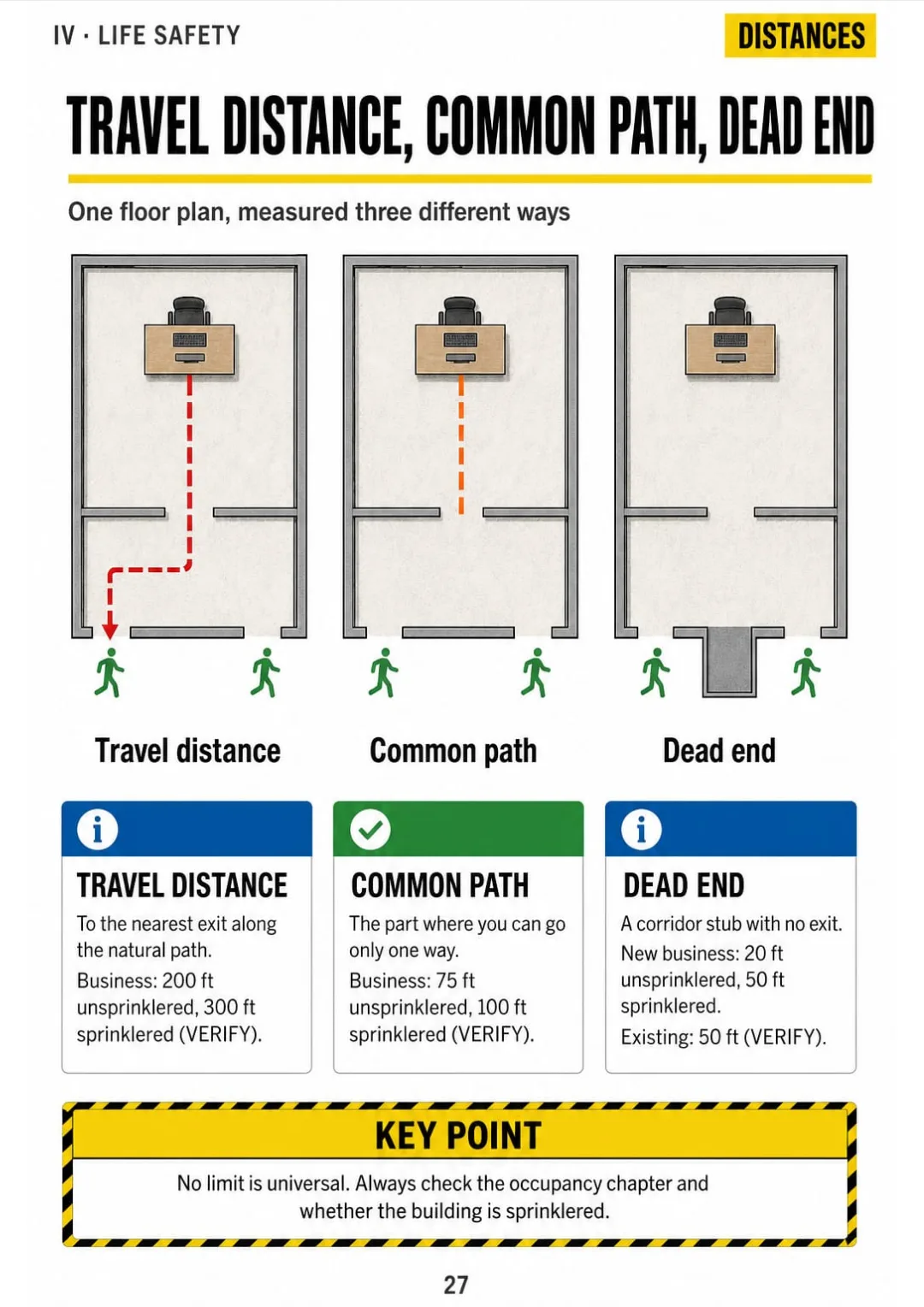
Travel distance, common path and dead end, using business occupancy as the example
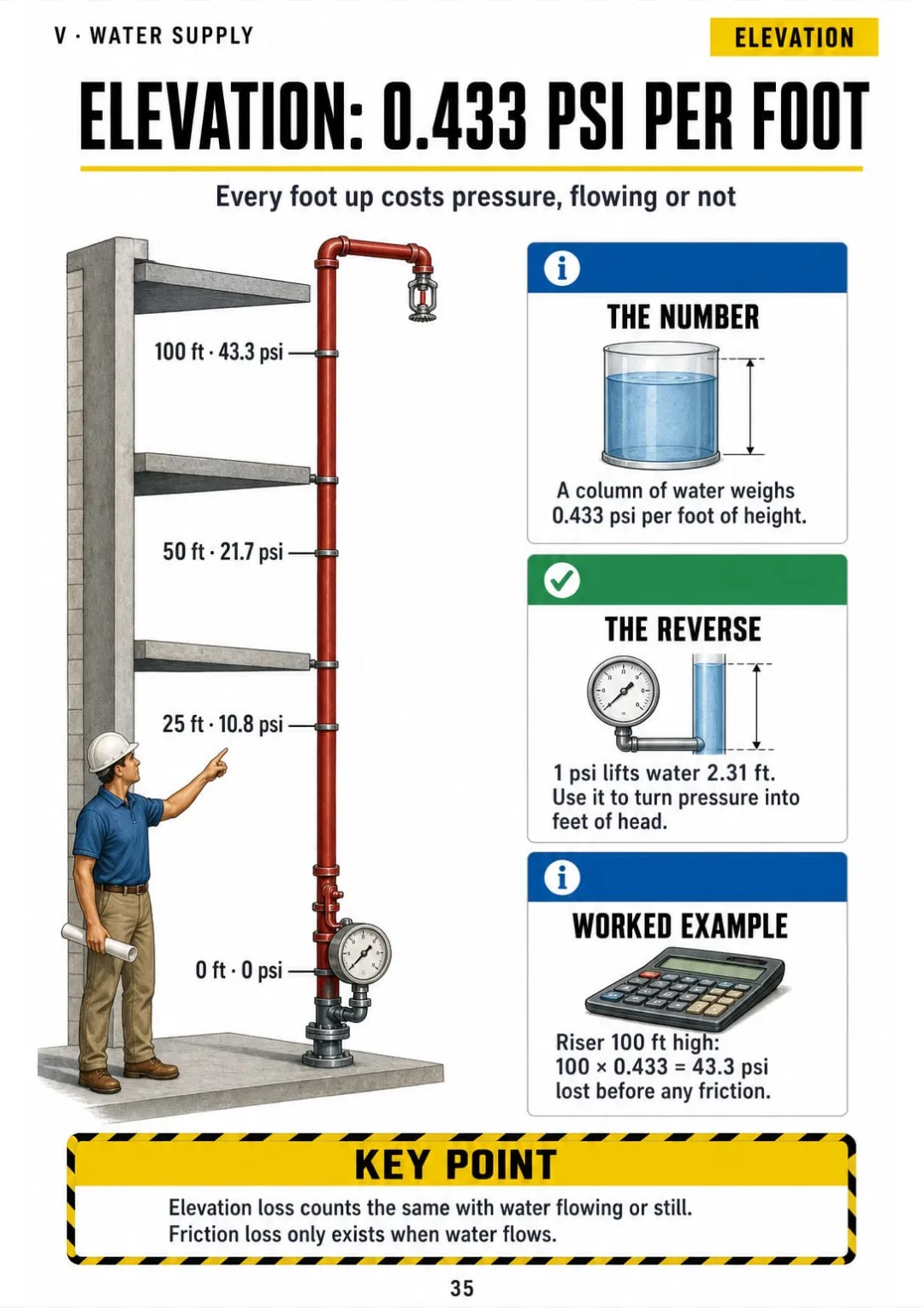
0.433 psi per foot, 1 psi = 2.31 ft: a 100 ft riser costs 43.3 psi.
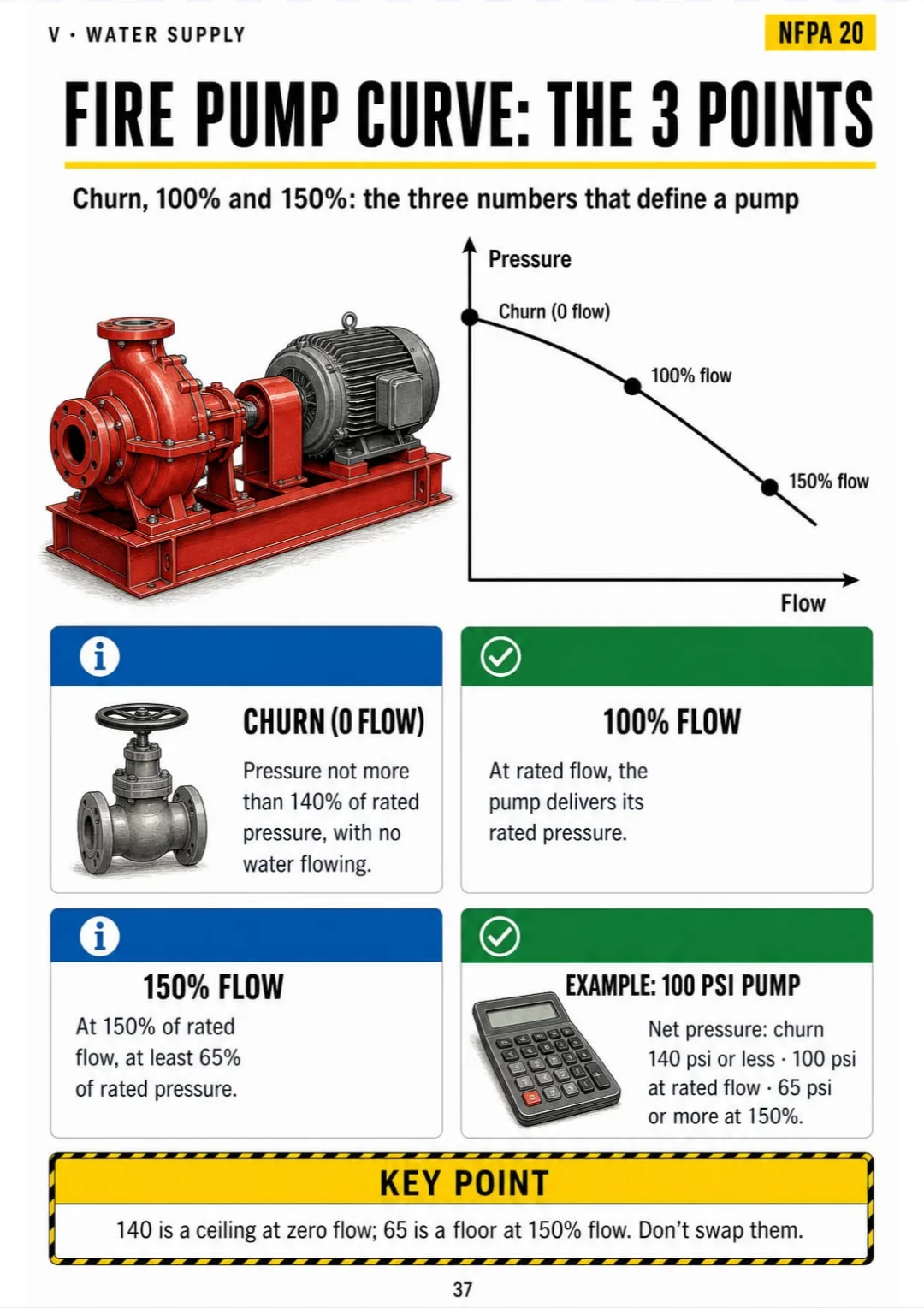
NFPA 20: churn ≤140%, rated pressure at 100% flow, ≥65% at 150% flow.
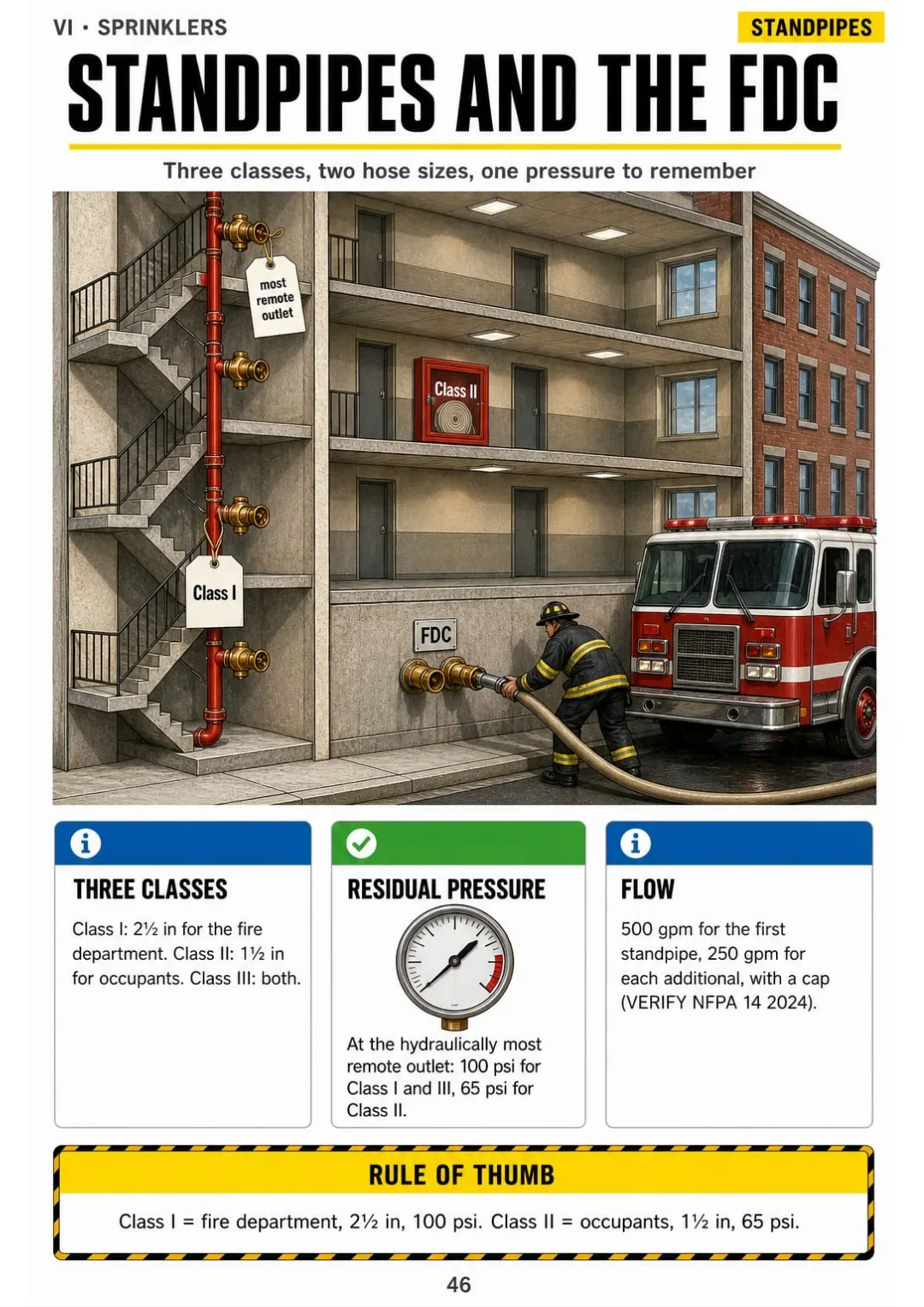
Standpipes: Class I 2½ in, Class II 1½ in, 100/65 psi at the most remote outlet, FDC.
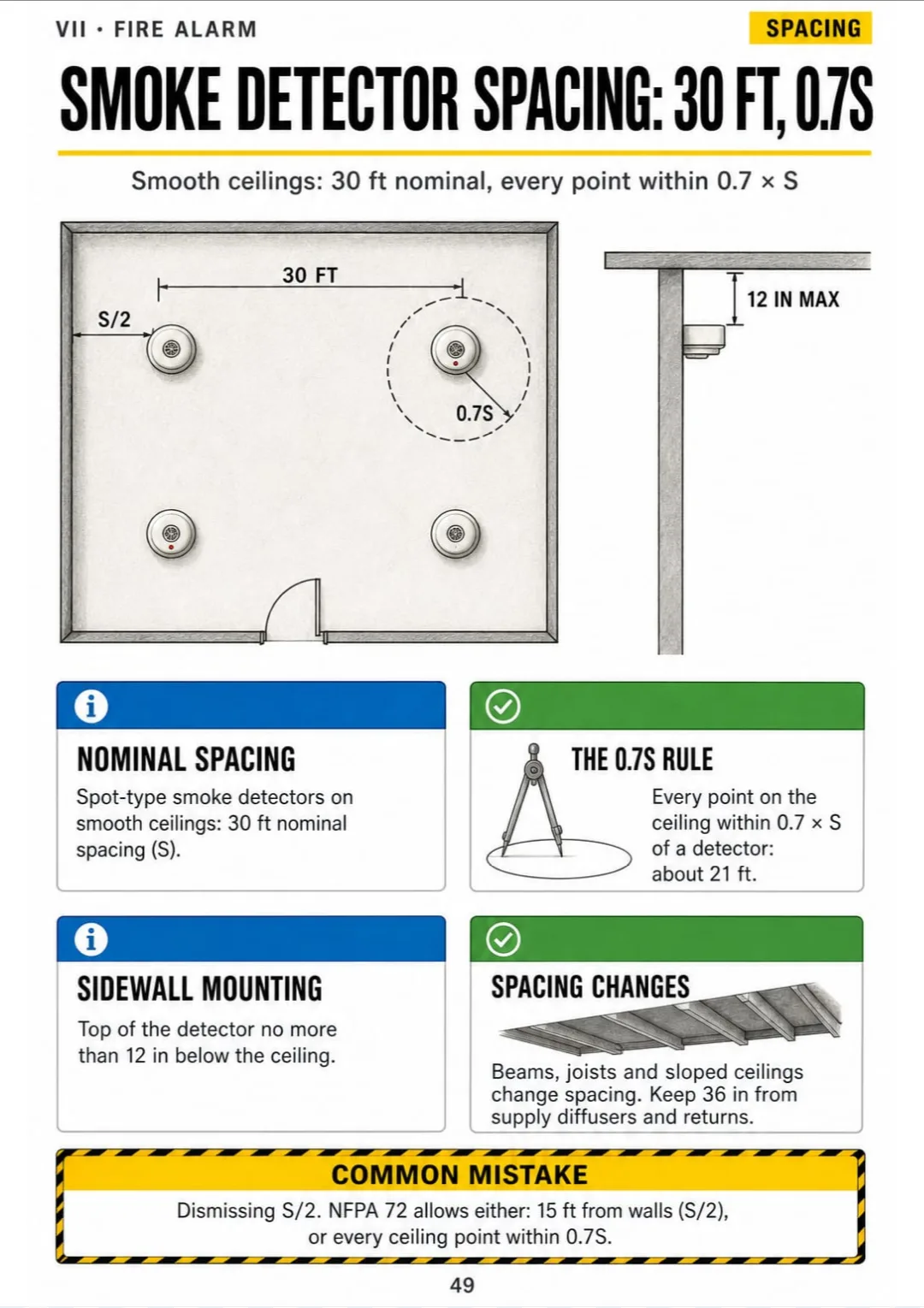
Smooth ceilings: 30 ft nominal spacing, every point within 0.7 × S (≈ 21 ft), sidewall top ≤ 12 in down
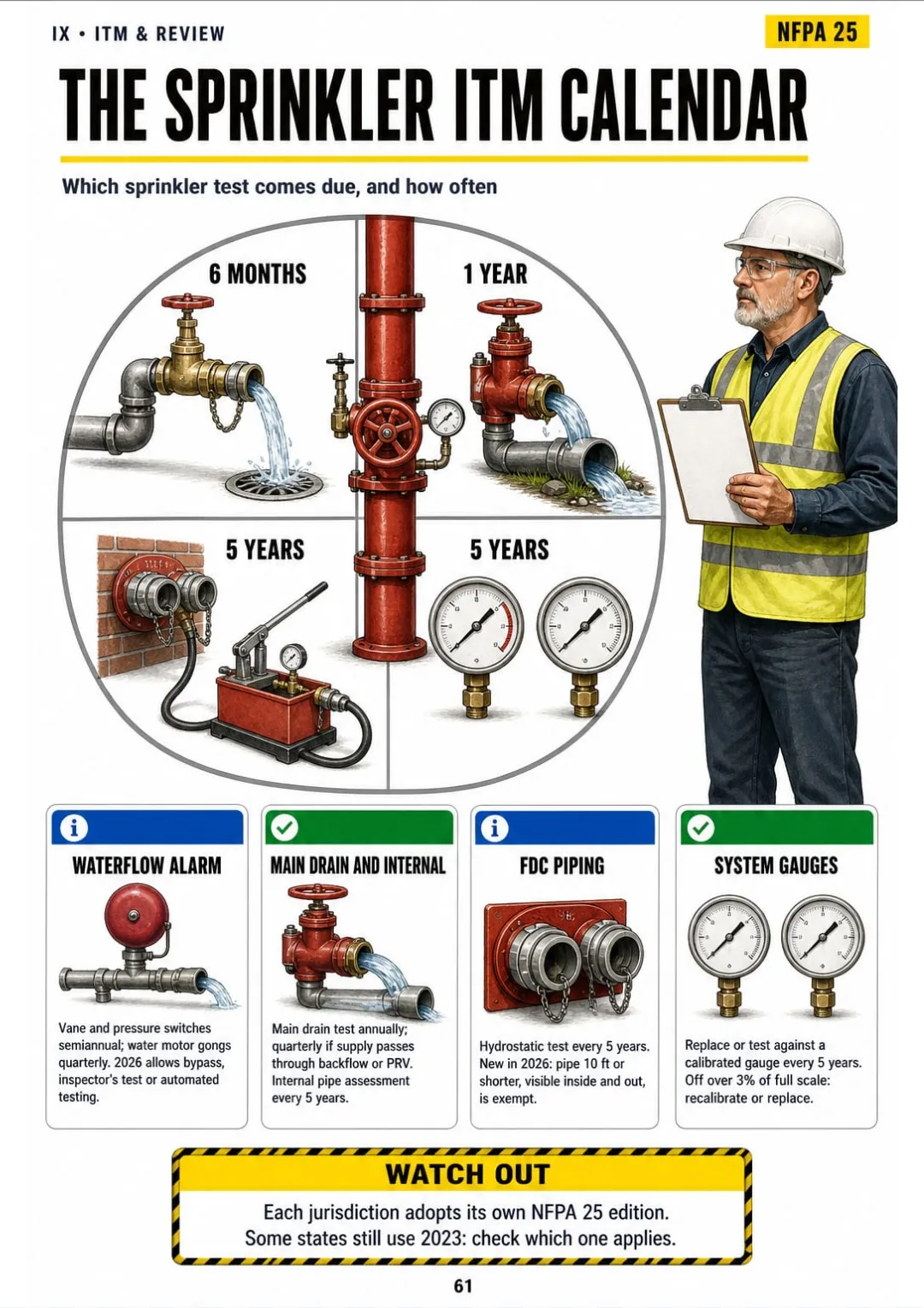
Vane and pressure-switch alarms every 6 months, main drain yearly, FDC hydro and gauges every 5 years.
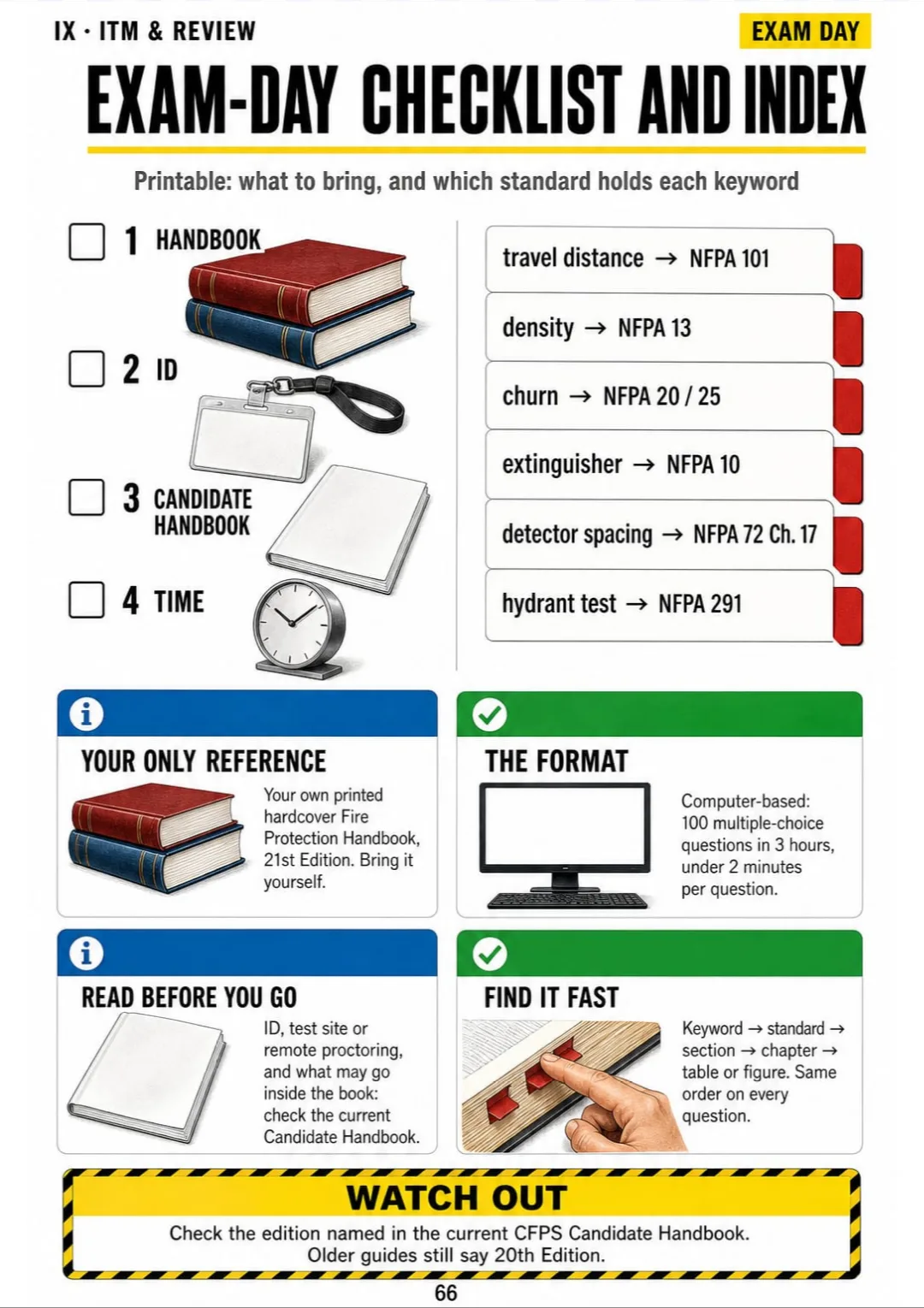
Bring your own printed hardcover FPH 21st Edition: 100 questions, 3 hours, open book.

Swipe to see more →

These are real pages from the book. The table of contents is the full one: 9 parts and 62 topics.

The Problem Isn't You. It's How It Was Explained to You.

You're on a hydrant flow test question: static 72 psi, residual 51, 1,100 gpm at the flow hydrant. The clock is running and you need the flow available at 20 psi.

You've read that chapter before. But the handbook covers it in paragraphs: which hydrant gets the gauge, which one flows, how the curve gets plotted. Words alone don't show you where each number comes from.

0.433 psi per foot, 1 psi = 2.31 ft: a 100 ft riser costs 43.3 psi.

In the book, the same test is one drawing: the test hydrant with its gauge, the flow hydrant with the pitot, and the formula with the 0.54 exponent that projects the flow to 20 psi residual (about 1,800 gpm here: class AA), with NFPA 291 marked as the place to look.

The fire pump curve, the wet pipe riser, smoke detector spacing, travel distance and the NFPA 25 calendar work the same way. Each one has its own page.

You see the setup, you know which number goes where, and on exam day you know exactly which handbook section to open.

COMPARE FOR YOURSELF

The Same Topic, Two Ways to Study It

THIS
  • The handbook: line after line
  • Travel distance and dead ends explained only in words
  • You walk into the exam still unsure
Travel distance shall be measured along the natural path of travel from the most remote point subject to occupancy to the nearest exit, whereas common path of travel denotes that portion of exit access which occupants are required to traverse before two separate and distinct paths to two exits become available. Dead-end corridors, by contrast, afford access in one direction only. Permitted limitations vary by occupancy classification and by the presence of an approved, supervised automatic sprinkler system; refer to the applicable occupancy chapter for the values in force.
FOR THIS
  • The whole floor plan in one drawing
  • The distances in a box
  • You see it and you get it
Travel distance, common path and dead end, using business occupancy as the example
CONTENTS

Take a Look at the 9 Parts and 62 Topics

The CFPS map, fire science, building construction, life safety and egress, water supply and hydraulics, sprinklers and standpipes, fire alarm, special hazards, and ITM with the final review: 66 pages, all illustrated.

IThe CFPS Map · pp. 5-8
  1. How the CFPS Exam Works
  2. Find It in 60 Seconds: The Open-Book Method
  3. The NFPA Standards Wall Chart
  4. How to Read This Book: Drawing, Numbers, Where to Look
IIFire Science and Hazards · pp. 9-15
  1. Fire Triangle vs. Fire Tetrahedron
  2. Conduction, Convection, Radiation
  3. Compartment Fire Stages and Flashover
  4. Fire Classes A, B, C, D, K
  5. Flash Point, Fire Point, Autoignition
  6. Flammable Range: LFL and UFL
  7. Combustible Dust: The Pentagon
IIIBuilding Construction and Compartmentation · pp. 16-22
  1. Construction Types I to V (NFPA 220)
  2. Reading the 3-Digit Code: I(442), II(111), V(000)
  3. Fire Resistance Ratings: How They're Tested
  4. Fire Wall vs. Fire Barrier vs. Smoke Barrier
  5. Opening Protectives: Fire Doors and Dampers (NFPA 80)
  6. Interior Finish: Flame Spread Classes A, B, C
  7. Penetrations and Firestopping
IVLife Safety and Means of Egress · pp. 23-30
  1. Occupancy Classifications (NFPA 101)
  2. Exit Access, Exit, Exit Discharge
  3. Occupant Load: Area ÷ Load Factor
  4. Egress Capacity: 0.3 and 0.2 Inches per Person
  5. Travel Distance vs. Common Path vs. Dead End
  6. Remoteness: The Half-Diagonal Rule
  7. Doors, Stairs and Exit Enclosures
  8. Emergency Lighting and Exit Signs
VWater Supply and Hydraulics · pp. 31-37
  1. Static, Residual, Flow Pressure
  2. Hydrant Flow Test (NFPA 291)
  3. Reading a Water Supply Graph (N^1.85)
  4. Friction Loss: Hazen-Williams in Plain Words
  5. Elevation: 0.433 psi per Foot
  6. K-Factor: Q = K√P
  7. Fire Pumps (NFPA 20): The 3 Points of the Curve
VISprinkler and Standpipe Systems · pp. 38-46
  1. Wet Pipe System
  2. Dry Pipe System
  3. Preaction: Single, Double Interlock, Non-Interlock
  4. Deluge System
  5. Occupancy Hazard and Density/Area
  6. Sprinkler Spacing and Coverage
  7. Temperature Ratings and Color Codes
  8. Storage Protection: Commodities, ESFR, CMSA
  9. Standpipes (NFPA 14) and the FDC
VIIFire Alarm and Detection (NFPA 72) · pp. 47-53
  1. The System in One Drawing
  2. Smoke Detectors: Photoelectric vs. Ionization
  3. Smoke Detector Placement and Spacing
  4. Heat Detectors: Fixed, Rate-of-Rise, Rate-Compensated
  5. Notification: Audibility and Visibility
  6. Power Supplies and Pathways
  7. Supervising Stations
VIIISpecial Hazards and Extinguishing Agents · pp. 54-60
  1. Portable Extinguishers (NFPA 10)
  2. Flammable Liquids Classes (NFPA 30)
  3. Foam Systems (NFPA 11)
  4. CO2 and Clean Agents (NFPA 12 and 2001)
  5. Dry and Wet Chemical: Kitchen Hoods
  6. Water Mist and Hazardous Locations
  7. Hot Work Permits (NFPA 51B)
IXITM, Impairments and Final Review · pp. 61-66
  1. NFPA 25: The Sprinkler ITM Calendar
  2. When to Replace or Test Sprinklers
  3. Fire Pump and Alarm Testing
  4. Impairments: Planned and Emergency
  5. The 10 Number Pairs People Mix Up
  6. Exam-Day Checklist and Where-to-Look Index

One Page, One Topic, All Clear

Think of it this way:

A practice question asks whether the common path on a business floor is too long. You're a sprinkler person, and egress was never your side of the job.

You open the book to that page and see one floor plan with travel distance, common path and dead end drawn in different colors, the limits in a box and the NFPA 101 chapter to open. On exam day, you already know where to look in the handbook.

Standpipes: Class I 2½ in, Class II 1½ in, 100/65 psi at the most remote outlet, FDC.

The hydrant flow test, the fire pump curve, smoke detector spacing and the NFPA 25 calendar work the same way: each one on its own page.

Fire Protection Specialist Illustrated is 9 parts and 62 topics, all drawn, and it ends with the 10 number pairs people mix up and an exam-day where-to-look index.

What you see drawn, you don't have to memorize.

What's Inside Fire Protection Specialist Illustrated:

Ipp. 5-8

The CFPS Map

How the CFPS works, the open-book method to find an answer fast, the NFPA standards chart and how each page is laid out.

IIpp. 9-15

Fire Science and Hazards

Fire triangle and tetrahedron, heat transfer, compartment fire stages and flashover, fire classes, flash point, flammable range and the dust pentagon.

IIIpp. 16-22

Building Construction and Compartmentation

Construction types I to V and the 3-digit code, fire resistance ratings, fire walls vs. barriers, doors and dampers, interior finish and firestopping.

IVpp. 23-30

Life Safety and Means of Egress

Occupancy classes, the three parts of egress, occupant load, egress capacity, travel distance vs. common path vs. dead end, remoteness, stairs and exit signs.

Vpp. 31-37

Water Supply and Hydraulics

Static, residual and flow pressure, the hydrant flow test, the water supply graph, friction loss, elevation, K-factor and the fire pump curve.

VIpp. 38-46

Sprinkler and Standpipe Systems

Wet, dry, preaction and deluge systems, density/area, spacing, temperature ratings, storage protection with ESFR and standpipes with the FDC.

VIIpp. 47-53

Fire Alarm and Detection (NFPA 72)

The alarm system in one drawing, smoke and heat detectors, detector spacing, audibility and visibility, power, pathways and supervising stations.

VIIIpp. 54-60

Special Hazards and Extinguishing Agents

Portable extinguishers, flammable liquid classes, foam, CO2 and clean agents, kitchen hood systems, water mist and hot work permits.

IXpp. 61-66

ITM, Impairments and Final Review

The NFPA 25 calendar, sprinkler replacement, pump and alarm testing, impairments, the 10 number pairs people mix up and the exam-day index.

At the end of the book: The 10 number pairs people mix up, an exam-day checklist and a where-to-look index.
Plus: 2 Free Books

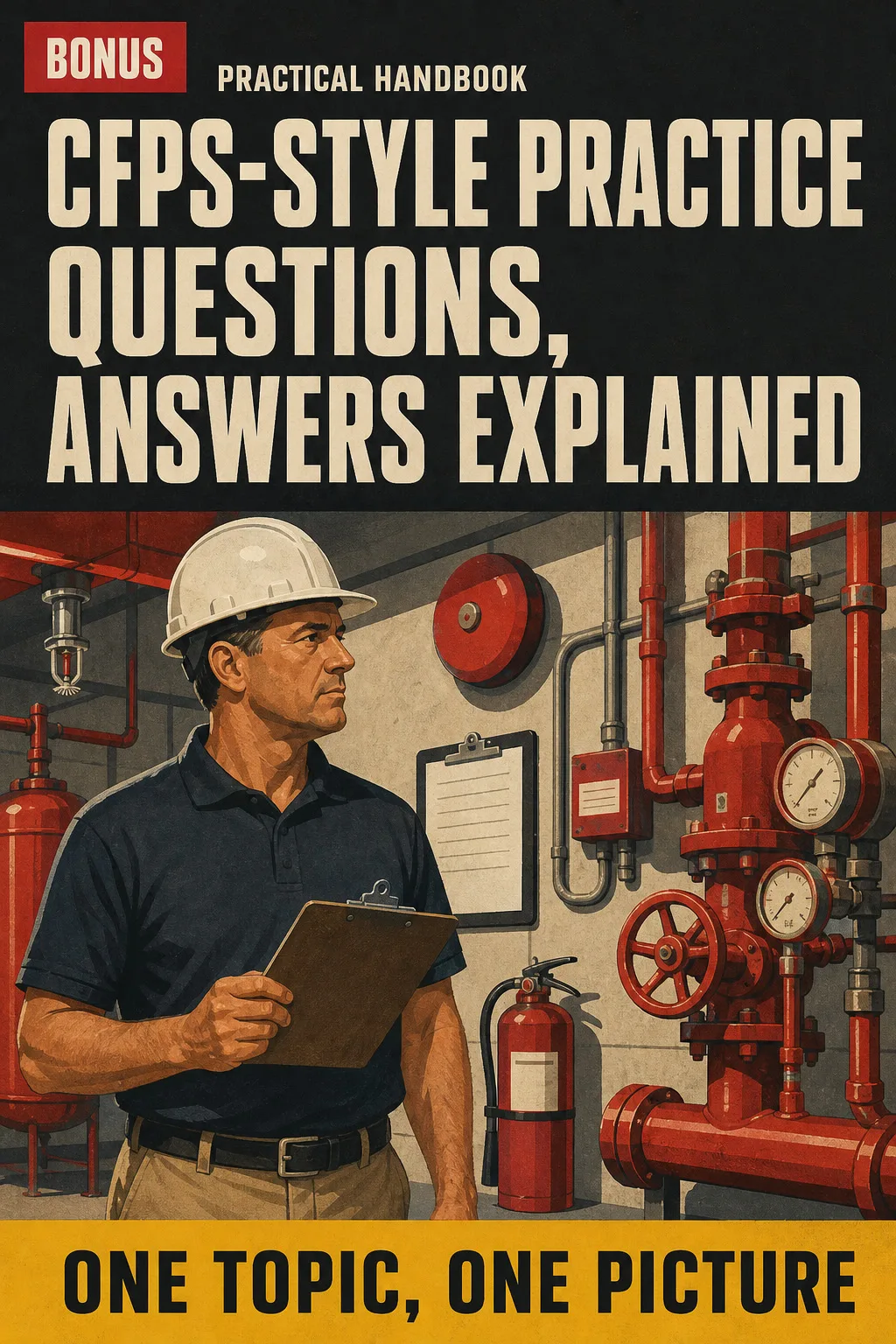
CFPS-Style Practice Questions, Answers Explained

BONUS 1: «CFPS-Style Practice Questions, Answers Explained»

Value on its own: US$ 17.90

Practice with exam-style questions across every topic, each answer explained with the drawing and the standard to look up, so you train the open-book search before test day.

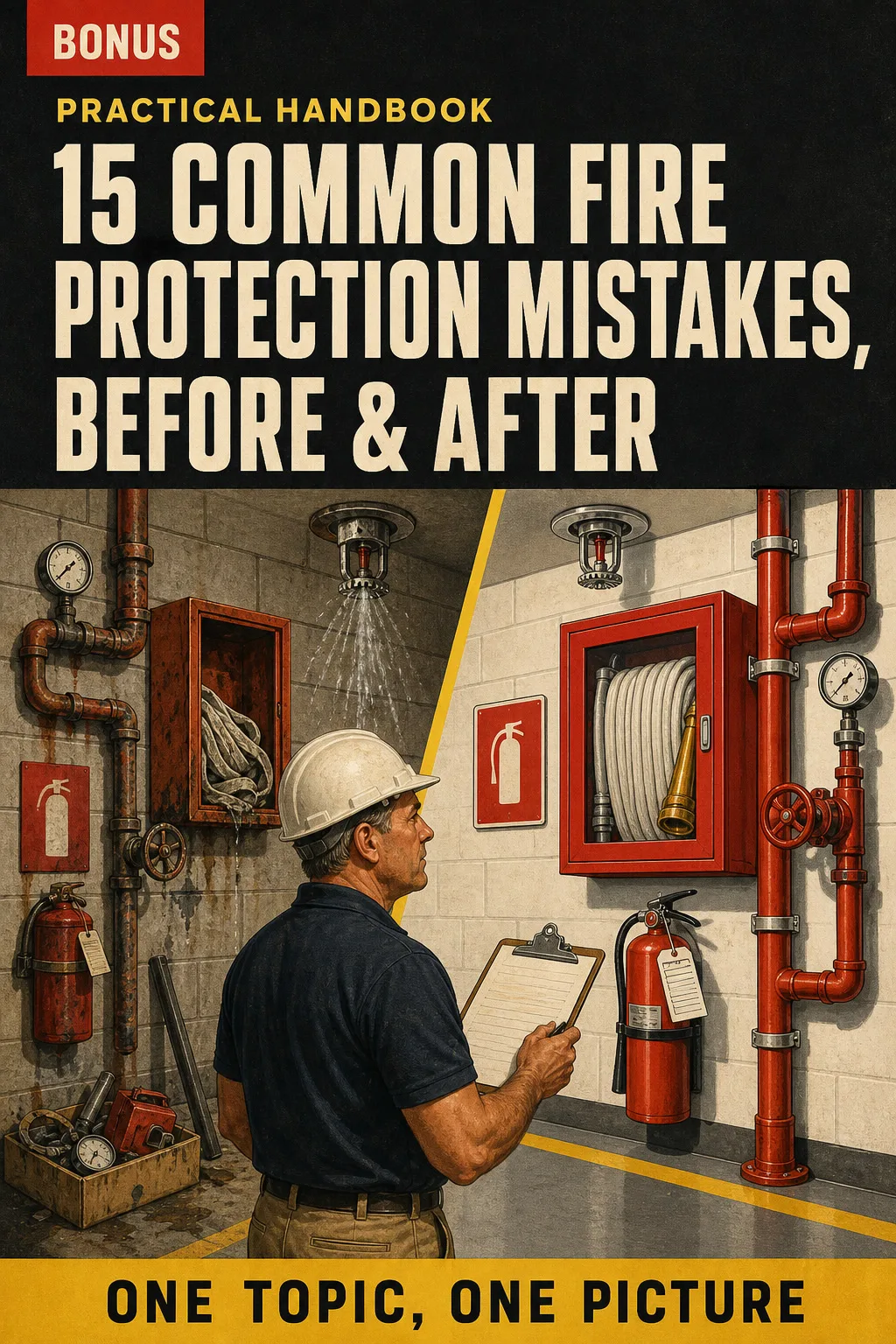
15 Common Fire Protection Mistakes, Before & After

BONUS 2: «15 Common Fire Protection Mistakes, Before & After»

Value on its own: US$ 14.90

See the mix-ups people make most often (dry vs. pre-action, travel distance vs. common path, fire barrier vs. smoke barrier) side by side with the right version, ready to review in minutes the night before.

Fire Protection Specialist Illustrated with 2 Free Books

  • Fire Protection Specialist Illustrated: 66 illustrated pagesUS$ 63
  • BONUS 1: CFPS-Style Practice Questions, Answers ExplainedUS$ 17.90
  • BONUS 2: 15 Common Fire Protection Mistakes, Before & AfterUS$ 14.90
  • High-resolution PDF to printIncluded
Total value US$ 95.80
YOUR PRICE:
US$ 27
You save US$ 68.80
YES, I WANT FIRE PROTECTION SPECIALIST ILLUSTRATED FOR US$ 27

📄 This is a digital PDF book sent to your email: nothing is printed or shipped.

Secure purchaseEncrypted payment30-day guarantee

PDF by email: We email you Fire Protection Specialist Illustrated as a PDF, together with the two free books. It's a single payment: no installments, no extra charges.

Who This Book Is For

You're studying the parts that aren't yours

You're studying the parts that aren't yours

You know sprinklers, or inspection, or alarms. The book fills in the rest of the CFPS topics, one drawing per page, without going back to the basics.

Your CFPS date is set

Your CFPS date is set

You review in the same order every time and know which standard to open for each question, so the open-book search doesn't eat your clock.

You already work in fire protection

You already work in fire protection

You keep a printed map of every system with its key numbers, handy for a survey, an inspection or a meeting with the AHJ.

Everything You Get Today

US$ 95.80US$ 27
YES, I WANT FIRE PROTECTION SPECIALIST ILLUSTRATED FOR US$ 27

📄 This is a digital PDF book sent to your email: nothing is printed or shipped.

30DAYS
GUARANTEE

30-Day Guarantee

Try Fire Protection Specialist Illustrated for 30 days, bonus books included.

We refund everything if the file won't open, if the book isn't what you see here, if you were charged twice or if the email doesn't arrive. Just email us.

You pay once. No subscriptions.

Frequently Asked Questions

Is it for me if I already work in fire protection but only know my part?

Yes. It's made for people who know sprinklers, or inspection, or alarms, and need the rest of the CFPS topics in order. It skips the very basics and goes straight to the numbers and where to look.

Where does the content come from?

From the NFPA Fire Protection Handbook edition listed in the current CFPS Candidate Handbook and the NFPA codes it cites (13, 14, 20, 25, 72, 101 and others). Every page names the standard and section to open, so you can check each value in the edition you use for the exam.

Is this official material?

No. It's an independent study guide, not affiliated with or endorsed by NFPA or the CFPS Board. It doesn't grant a certificate or continuing education credits: the CFPS credential comes only from passing the official exam.

Does it replace the handbook or a prep course?

No. You take the exam with the official references allowed by the CFPS Candidate Handbook, not with this book. This book is for studying before: what each system is, the key numbers, and which handbook section to open for each question.

Are the practice questions the real exam questions?

No. They're written for this book in the style of the exam, each with the answer explained and the standard to look up.

When and how do I get it?

The book and the 2 bonus books come as PDFs by email, to the address you enter at checkout.

Do I have to pay every month?

No. It's a one-time payment.

Can I have it on paper?

Yes. The PDF is printable: print the whole book or just the pages you want next to you while you study.

How does the refund work?

You have 30 days. We refund everything if the file won't open, if the book isn't what you see on this page, if you were charged twice or if the email doesn't arrive: just email us.

Before You Close This Page

No more rereading the handbook with nothing sticking.

The hydrant flow test is drawn, and you've got it.

You walk into the CFPS knowing where everything is.

Drawings make studying faster.

The book is right below.

One-time payment: US$ 27 · Guarantee: 30 days · PDF by email

YES, I WANT FIRE PROTECTION SPECIALIST ILLUSTRATED FOR US$ 27

📄 This is a digital PDF book sent to your email: nothing is printed or shipped.